

New book chapter published!
Diplomacy’s Public Turn: Prospects for Theory and Practice

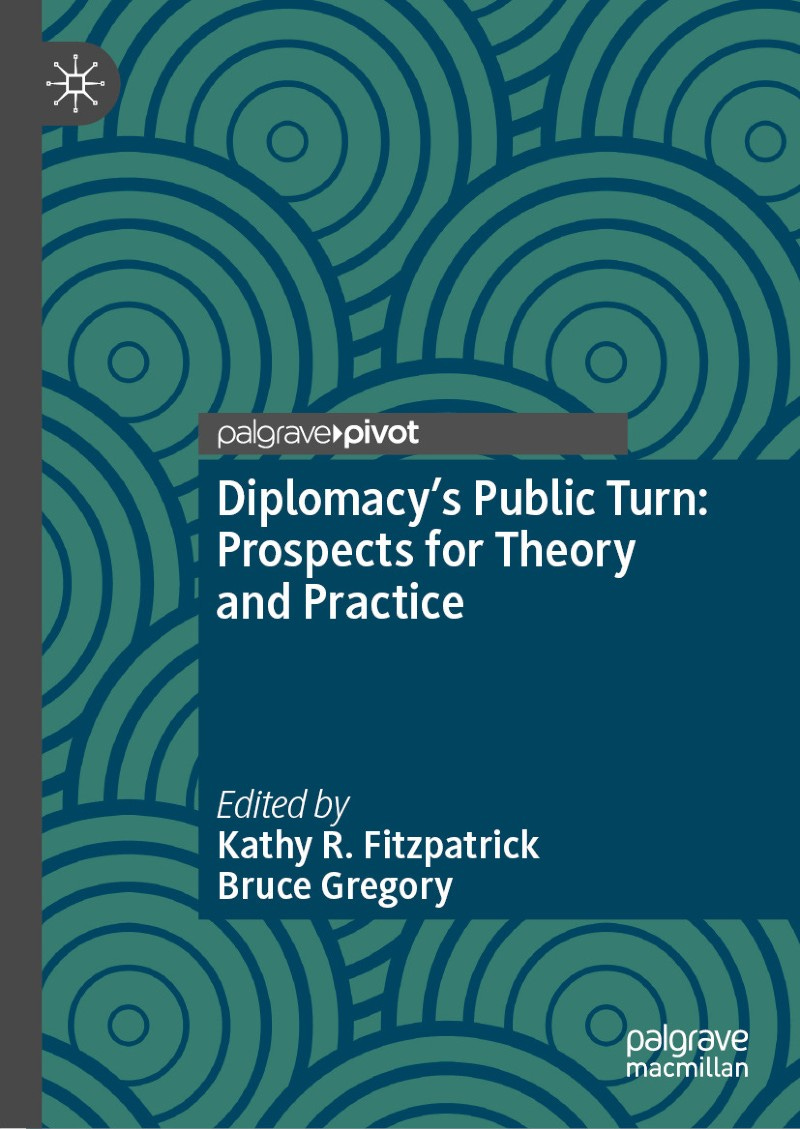
I am excited to share with you a chapter I contributed to a new book about public diplomacy. The book, Diplomacy’s Public Turn: Prospects for Theory and Practice, is an edited volume compiled by the wonderful scholars Kathy Fitzpatrick and Bruce Gregory. Public diplomacy is in the midst of generational changes, and the opportunity for a group of authors to step back and reflect on its future is immensely useful. I hope folks will grab a copy of the book: https://link.springer.com/book/10.1007/978-3-032-12857-7
My chapter is titled What Is an Expert? Public Diplomacy in a Complex and Uncertain World. The chapter argues that public diplomacy practitioners are shifting toward a new culture of expertise grounded in empirical evidence, rigorous evaluation, and adaptive learning. Expertise requires two essential conditions: clear feedback and deliberate integration of that feedback through effortful practice. Yet public diplomacy often lacks these feedback loops, leading to overconfidence and ineffective programming. Through a case study of a public diplomacy campaign that inadvertently exacerbated political violence, the chapter highlights the risks of relying on anecdotal evidence rather than systematic evaluation. It proposes a new framework for expert public diplomacy emphasizing: (1) clearly articulated, research-informed goals; (2) robust monitoring and evaluation systems; (3) iterative learning loops to refine strategies; and (4) a workforce trained in analytical and evaluative competencies. Ultimately, it calls for institutional reforms to embed evaluative rigor and intellectual humility— namely, individual expertise—across the diplomatic enterprise, ensuring that public diplomacy is effective and accountable in an increasingly complex global environment.
Here’s the full list of chapters with abstracts:
Introduction, Kathy R. Fitzpatrick & Bruce Gregory
This chapter introduces a collection of works from thought leaders and innovators who explore the growing societization of diplomacy at home and abroad and near universal acceptance of public diplomacy’s centrality in contemporary diplomatic practice—what we call diplomacy’s public turn. Contributors share ideas and insights on three important trajectories in a shifting diplomatic landscape. First, the complexity of state-society relations with stunning growth in numbers, categories, and impacts of diplomatic actors and publics. Second, a redefined diplomatic operating environment due to the expanding scope and scale of societal interconnections, disruptive geopolitical conflicts, societal polarization, and declining trust in institutions and mediated information. Third, the transformation of academic study and everyday diplomatic practice resulting from blended digital and analog technologies, rampant disinformation, and the threats and opportunities of artificial intelligence. This chapter provides a preview of the authors’ views on these transformational changes and the impact of diplomacy’s public turn on diplomacy’s future.
The Societization of Diplomacy: Transitioning Operational Landscapes, Shifting Lenses, Jan Melissen & Lavinia Pacifici
The study of diplomacy has long been centered around the architecture of states and their external interactions, yet rapid societal transformations are reshaping its foundations. The increasing politicization of foreign policy, the rise of populism, and the growing weight of public concerns in global governance are among the forces challenging the traditional separation between the domestic and international spheres. We introduce the concept of the societization of diplomacy to describe this shift and its significance, illustrating how diplomatic practice is rooted in evolving state-society dynamics that cross borders. Introducing the social contract as a first reference, diplomacy emerges not so much as a tool of statecraft but as a practice significantly influenced by citizens’ expectations of legitimacy, representation, and participation. Society is no longer peripheral—if it ever was—and now plays a central role in shaping diplomacy, requiring recognition both in theory and practice. This reconceptualization expands the scope of diplomatic studies, incorporating insights from political theory, sociology, and other social sciences to better understand diplomacy as a governing practice. Ultimately, the societization perspective redefines diplomacy as a collaboratively produced effort where the state and society are deeply interconnected, continuously negotiating interests, the meaning and purposes of foreign policy, and global responsibilities.
Societizing Diplomacy or Diplomatizing Society?, Paul Sharp
This chapter presents diplomacy as a distinctive and valuable social practice. It argues that students of diplomacy should shift their attention from applying the insights of other social practices to how diplomats should act in a public environment populated by social actors. Instead of looking at the societization of diplomacy, they should be researching, theorizing, and advocating for the diplomaticization of social actors and the conditions under which this is more and less likely to occur.
Pathways to Humanity-Centric Approaches to Public Diplomacy as an Instrument of Progress, Prosperity, and Peace, R. S. Zaharna
This chapter challenges traditional battle-oriented public diplomacy, arguing for humanity-centered approaches that align with global connectivity and diversity dynamics amid diplomacy’s expanding societal engagement. The research identifies a critical misalignment between competitive “battle for hearts and minds” strategies—rooted in separateness assumptions—and the prevailing dual dynamics of connectivity and diversity that characterize contemporary cross-border challenges. Through analysis of off-stage initiatives, the study delineates features of humanity-centric approaches: holistic perspective, diversity integration, relationality, global consciousness, issue-driven focus, process orientation, and collaboration. Expanded functions are also explored: problem-solving for complex global challenges, identity mediation, emotion mediation during crises, and conflict mediation and peacebuilding. Contemporary case studies are used to demonstrate humanity-centric approaches in practice. The chapter advocates for consensus communication that aligns with humanity-centric features and the global dynamics of connectivity and diversity. As global challenges demand collective action, humanity-centric approaches offer a practical imperative for leveraging connectivity and diversity to achieve human progress, prosperity, and peace.
Regional Diplomatic Culture and Diplomacy’s Public Turn, Geoffrey Wiseman
As concerns mount about the downsides of globalist approaches to world politics and the rise of illiberal nationalist ones, debates continue as to whether and how regionalist perspectives might enhance international cooperation. This chapter considers whether increased scholarly and practitioner focus on the concept of regional diplomatic culture can contribute to thinking about diplomacy and its “public turn.” It identifies three criteria for evaluating the idea of diplomacy’s public turn: more openness (transparency) about diplomatic work, wider and deeper engagement with home publics about diplomacy (societization), and more interactive (relational, or dialogical) public diplomacy. The chapter considers these criteria in relation to five disparate “regions” — the European Union, North Asia, South Asia, Southeast Asia, and the Pacific Islands. While regional conceptions of identity and diplomatic interaction are highly varied worldwide, the chapter concludes that a regional-cultures interpretation of the public turn adds normative weight to longstanding appeals to democratize diplomacy.
The Boundaries of Public Diplomacy: Public Turn while Maintaining the Diplomatic Ground, Kadir Jun Ayhan
The first step in delineating the boundaries of public diplomacy is to ground it firmly as a diplomatic practice. In this chapter, I suggest that, for the sake of analytical coherence, public diplomacy activities must satisfy the following conditions: communication must take place between groups separated by geopolitical boundaries; the political agenda must be for public or collective interests represented by institutionalized actors with intentionality, ultimately to influence or support foreign policies. I explain these conditions to distinguish public diplomacy from other forms of human interactions.
Rethinking the Public in Public Diplomacy: Contemporary Characteristics and Implications, Jian Wang
This chapter reflects on the evolving nature of “the public” in contemporary society. It calls for a renewed focus on the public as the central concern of public diplomacy efforts. The discussion begins with a reconsideration of Walter Lippmann’s seminal insights into how publics form perceptions of the world beyond their immediate experience, which remain strikingly relevant in today’s digital information environment. The essay then outlines six key characteristics that define the contemporary public. It concludes by emphasizing the need for more advanced approaches to audience analysis as essential elements of effective public diplomacy.
Reputational Security on the Edge: Diplomacy’s Public Dimension in a Post-Soft Power World, Nicholas J. Cull
This chapter argues that one of the main ways of understanding the societization of diplomacy—the theory and practice of Soft Power—is now so diminished as to constitute the end of an era. It posits the idea of Reputational Security as a substitute. The chapter explains core elements of Reputational Security, including its openness to collective work, its connection to the core business of the state, and its linkage to reform. It considers future development of the approach using the well-known five-element model of public diplomacy: listening, advocacy, cultural diplomacy, exchange diplomacy, and international broadcasting. It concludes that the reputations of western countries and especially the United States are fragile, and countries that fail to work together to address the shared challenges of our era will be judged critically, eroding both reputation and—by implication—security.
Bridging Gaps in Public Diplomacy Research, Eytan Gilboa
This work presents and analyzes four gaps in public diplomacy (PD) research: between and among disciplines, between theory and practice, between theory and reality, and between theory and technology. The first two are known and have been researched albeit in general connection with foreign policy, not with PD. The other two are just beginning to be researched. PD is the most multidisciplinary field ever developed. Yet, scholars from many disciplines in the humanities, social sciences, and technology haven’t yet found ways to expand collaboration. The world order is moving from a liberal system to an illiberal one. Much of the present literature has been pursued within the liberal order. PD scholars need to explore the roles and functions of PD in the emerging one. AI is relatively new but has already had significant effects on PD. The combination of AI and disinformation could be disastrous to PD. This chapter presents ways to reduce the gaps, but the main conclusion is that only sustained and creative multidisciplinary research can close or reduce these gaps.
Mediatization, Logics of Diplomacy, and the Crisis of Epistemic Security in the Digital Age, James Pamment
This chapter investigates the theoretical and practical intersections of mediatization theory, the “logics” approach to public diplomacy, and the concept of epistemic security. Mediatization theory challenges our understanding of diplomacy by showing how diplomacy is not merely communicated through media but increasingly constituted by media logic. The “logics” approach expands on this by introducing a pluralistic, institutionalist framework that explains the dynamic rationales underpinning different public diplomacy practices. This chapter examines these theories against the backdrop of what might be termed a crisis of epistemic security; that is to say, significant challenges to what constitutes valid knowledge in foreign policy. Using three brief empirical cases, the chapter illustrates how the mediatization of diplomacy and its guiding logics both shape and are shaped by the increasing instability of shared knowledge frameworks in the post-truth era. The essay concludes that promoting and safeguarding epistemic security is now a central task for diplomacy, and that mediatization and logics theories offer valuable theoretical tools to understand and navigate this challenge.
Towards AI-Enhanced Public Diplomacy? A Quantum Reflection, Ilan Manor
Over the past two decades, digital technologies have disrupted the practice of public diplomacy giving rise to new norms, values, and practices among diplomats and ministries of foreign affairs (MFAs). This chapter seeks to examine how artificial intelligence (AI) could further disrupt the practice of public diplomacy. The chapter uses concepts and theories from quantum mechanics to argue that AI will further accelerate the fragmentation of digital publics into networks that subscribe to different definitions of reality. AI-generated content, disseminated and filtered through social media algorithms, may create a plurality of plausible realities to which networked individuals subscribe. The chapter further argues that public diplomacy by nature seeks to create a shared definition of reality between states and publics. As such, AI presents a substantial challenge to the practice of public diplomacy, one that could be overcome through diplomatic collaboration with epistemic communities and the bolstering of epistemic authority. The chapter concludes by outlining how such collaborations may prove more beneficial than existing attempts to regulate AI at the national or international level.
Digital Public Diplomacy and the Illusion of the Online/Offline Divide, Elsa Hedling
The rise of social media platforms in the early 2010s marked a shift in public diplomacy practice, resulting in the emergence of “digital public diplomacy.” This chapter explores the evolution of digital public diplomacy by emphasizing digital culture as a significant source of social and political change in a broader societization of diplomacy. Moving beyond a narrow focus on digitalization, it argues for a broader understanding of digital public diplomacy through the lens of a digital culture that encompasses the norms, behaviors, and political expressions shaped by pervasive digital technologies. Drawing on research on the European Union’s public diplomacy, the chapter critiques the conceptualization of the online/offline divide and advances digital sociability as a more instructive lens for analyzing contemporary public diplomacy practices and their centrality in cross-border collaboration. It concludes by reflecting on the implications of digital culture for the future of public diplomacy research and suggesting new directions for inquiry in an era where digital engagement and persuasive power are both essential and increasingly contested.
Reimagining U.S. Diplomatic Practice: The Case for Public Diplomacy, Vivian S. Walker
At a moment when the U.S. government appears to be systematically devaluing diplomacy’s public dimension, and the underlying values that frame it, this essay offers a realistic, practitioner-focused assessment of the evolving roles, responsibilities, and value of public diplomacy. The networked age has resulted in the definitive and irrevocable broadening of the community of practice. It has also introduced communication technologies that, while disruptive, allow for more effective projection of national legitimacy and power in the global information space. To assure U.S. public diplomacy’s continued relevance, practitioners must engage in ruthless program prioritization and consolidation; more consistent, consolidated, and accessible program data sharing; creation of a flexible mechanism for interagency coordination on message development and delivery; and strategic integration of successive technology innovations in program design, implementation, and assessment. These recommendations for the reimagination of public diplomacy presuppose the centrality of diplomacy’s public dimension and an expanded scope of practice. They assume a continued reliance on persuasion and attraction as viable instruments of statecraft. Ultimately, the reimagination of public diplomacy for this tumultuous age demands a renewed commitment to soft power and the exercise of strategic patience.
Conclusion, Bruce Gregory & Kathy R. Fitzpatrick
Contributors to this collection were invited to consider key issues in diplomacy’s public turn during recent decades and to reflect on what successor generation scholars and practitioners should understand going forward in turbulent geopolitical and technological landscapes. This chapter summarizes areas of consensus on changes from earlier thinking and areas of difference on analytical, normative, and operational issues. The authors share common ground on three developments. First, the societization of diplomacy and diplomacy’s public dimension are established core concepts in academic study and diplomatic practice. Second, digitalized diplomacy and AI will enhance, disrupt, and transform diplomatic institutions and patterns of practice. Third, scholars and practitioners must engage in new ways with knowledge domains across the sciences, social sciences, and humanities. The collection also offers an array of perspectives sure to energize debate and prompt new ideas. Familiar areas of difference on terms, concepts, and definitions are reframed in the context of diplomacy’s societization and changing circumstances. Chapters reflect diverse perspectives on boundaries needed to define analytical concepts, disciplines, and practices of state-centric, sub-national, supra-national, and humanity-centric diplomatic actors. Other differences are revealed in multiple pathways to innovations in diplomacy’s institutions, tools, and methods. The authors’ ideas and insights will be foundational in future research and in advancing diplomatic practice.
https://youtu.be/dpEDbxZJRKs?si=HYQMEPPitDA36F4b